The Science Behind Montessori: 4 Principles That Prove It Works (Part 1)
Montessori education has been guiding young minds for over a century, but as parents, it is natural to ask: Does it actually work today?
If you have ever wondered whether child-led, hands-on learning prepares children for long-term academic and life success, the research offers a resounding yes. Dr. Angeline Stoll Lillard, a professor of psychology at the University of Virginia, spent years examining this exact question. Her groundbreaking book, Montessori: The Science Behind the Genius, breaks down how modern developmental psychology validates what Dr. Maria Montessori discovered through careful observation over a hundred years ago.
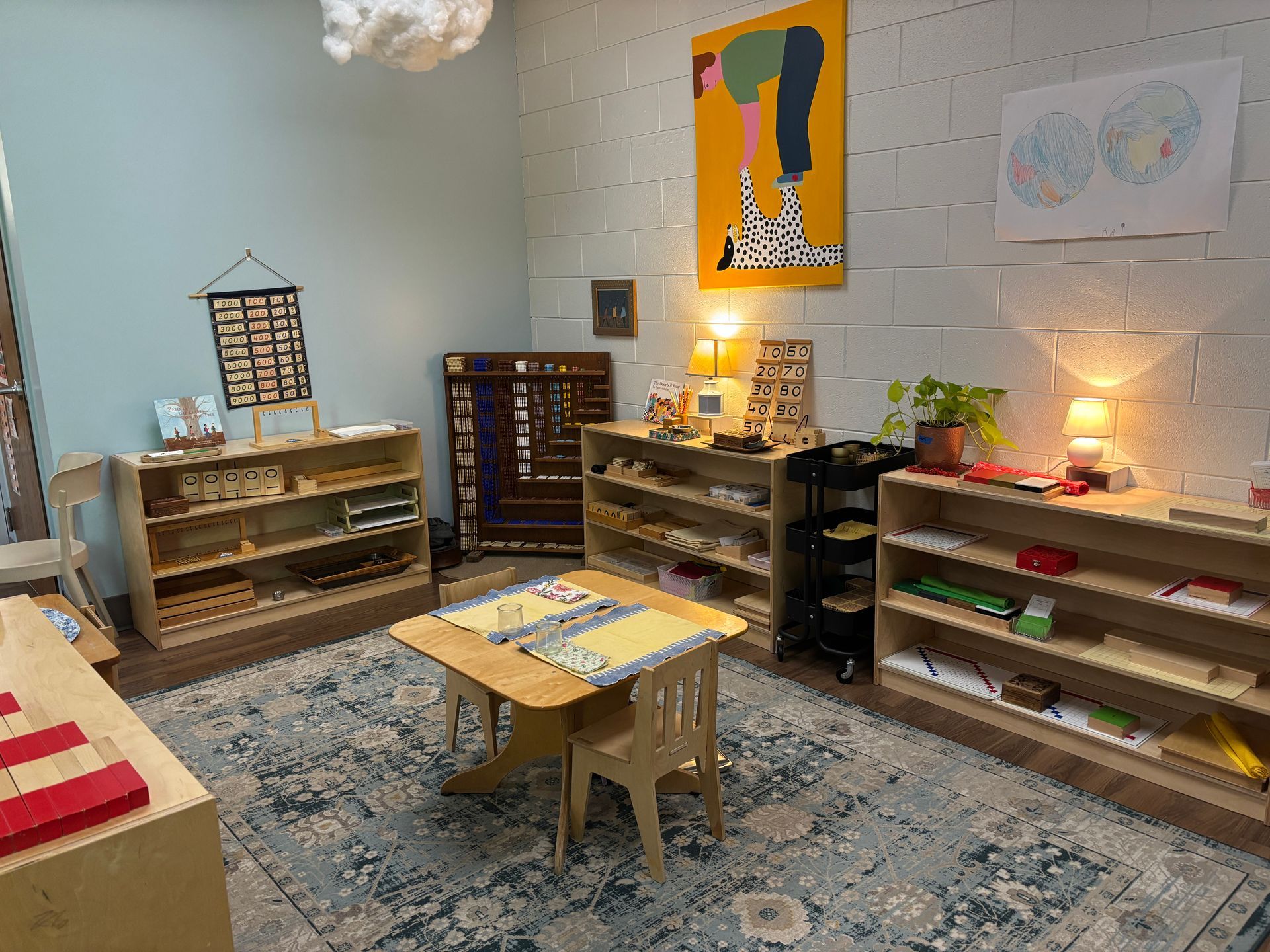
At Stepping Stones Montessori School, we see these principles in action every day in our Children’s House classrooms. Dr. Lillard identifies eight core principles at the heart of Montessori education. In Part 1 of this series, we examine the first four principles and the research behind why they work.
Principle 1: Movement and Learning Are Deeply Entwined
In many traditional early childhood settings, children are expected to sit still for long periods to listen and learn. At Stepping Stones Montessori, we know that movement isn’t a break from learning—movement is the learning.
Modern developmental science shows that physical movement directly improves cognition, focus, memory, and spatial reasoning. For young children, the brain and body develop together.
In our Children’s House environments, learning is intentionally hands-on:
- Sensorial Exploration: When a child carries and sorts the Pink Tower or arranges knobbed cylinder blocks, they are actively training their eyes, hands, and brain to make complex visual and spatial judgments.
- Practical Life Activities: Simple tasks like pouring water, buttoning, folding cloth, or slicing fruit develop fine motor control, hand-eye coordination, and executive function skills.
What the Research Shows: Longitudinal research, including a key Milwaukee study, found that students who attended Montessori programs during their early years significantly outperformed their peers on math and science assessments in high school. These subjects rely heavily on spatial reasoning and problem-solving skills that are first built through physical, hands-on Montessori materials.
Principle 2: Choice Improves Both Learning and Well-Being
Freedom of choice is a cornerstone of the Children’s House experience, but it is not a free-for-all. Montessori offers freedom within limits.
Having agency over their day measurably impacts how well children learn and how confident they feel. In a landmark study on childhood motivation, researchers gave seven- to nine-year-old children puzzle problems to solve. Children who were allowed to choose their own category of puzzle solved twice as many as those whose tasks were chosen for them—even though the puzzles were identical in difficulty. The children who had a choice also spent significantly more voluntary time working on puzzles during free periods.
When children feel a sense of ownership over their work, they engage deeper, persist longer through challenges, and take pride in their accomplishments.
In our classrooms, our Guides (teachers) prepare a rich, structured environment. Children are given the freedom to choose activities matching their developmental readiness. This bounded choice helps them enter a state of deep concentration and joy in their work.
Principle 3: Children Learn Best When They Are Genuinely Interested
We all retain information better when we care about what we are doing. Yet, traditional instruction often forces an entire classroom of children to focus on the same subject at the exact same moment, regardless of individual readiness or interest.
Dr. Montessori recognized that children experience "sensitive periods"—natural developmental windows during which they are uniquely primed to absorb specific concepts, such as language acquisition, order, or spatial relationships. When learning matches a child’s inner readiness, mastering a new skill feels natural and rewarding.
In our Children's House classrooms:
- Materials are designed to be visually appealing, self-correcting, and tactile.
- Guides observe each child carefully to introduce new lessons at the precise moment their natural interest and curiosity are peaked.
- Learning moves at the child’s pace—never rushed, and never held back.
Principle 4: Intrinsic Motivation Trumps External Rewards
Sticker charts, gold stars, and constant external praise are common tools in traditional education, but research shows they can actually weaken a child's natural love of learning.
When children are offered external prizes for activities they already enjoy, their internal drive drops. In a famous study with preschoolers who loved drawing, researchers introduced a "Good Player Award" for drawing pictures. Weeks later, the children who expected a reward spent half as much time drawing voluntarily compared to children who were never offered a prize. Expecting a prize turned an activity they loved into a chore done for a reward.
At Stepping Stones Montessori, we protect your child’s natural, intrinsic drive to learn:
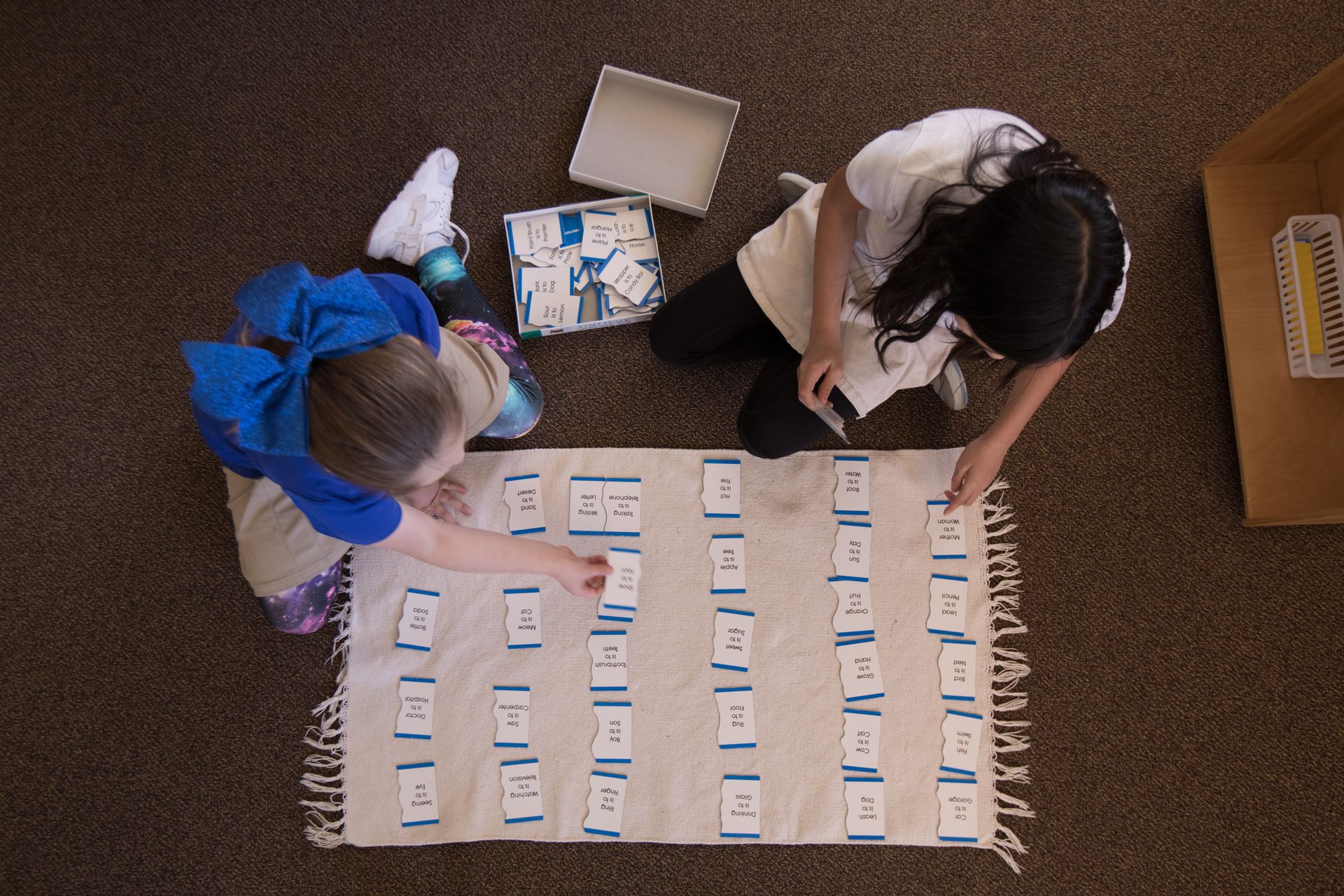
- Self-Correcting Materials: Our materials provide immediate feedback. If a piece doesn't fit, the child discovers it independently without needing an adult to correct them.
- Process-Focused Feedback: Rather than praising children with generic terms like "you're so smart," our Guides offer feedback that highlights effort, persistence, and process (e.g., "You worked on that puzzle for a long time until you figured it out"). This fosters a growth mindset and resilience.
Experience the Montessori Difference at Stepping Stones
Understanding the theory behind Montessori is wonderful, but seeing it in person is where it truly comes to life. Observing a three- or four-year-old in our Children's House focus intently on a task, master a complex skill, and smile with genuine self-pride is an unforgettable experience.
Coming later this month, we will explore the remaining four principles from Dr. Lillard’s research, including how children learn from peers, the power of meaningful context, and how an ordered environment supports an ordered mind.
Are you exploring early childhood options for your child? We invite prospective families to schedule a private tour of Stepping Stones Montessori School to observe our Children's House classrooms in action.