The Science Behind Montessori: 4 Principles That Prove It Works (Part 2)
In Part 1 of this series, we began exploring the eight core Montessori principles that developmental psychologist Dr. Angeline Stoll Lillard examines in her landmark book, Montessori: The Science Behind the Genius. As we saw, what makes these principles so compelling is that Dr. Maria Montessori’s observations over a century ago directly align with what modern brain science tells us about how children actually learn.
In this second and final installment, we look at the remaining four principles—peer learning, real-world context, adult-child interactions, and environmental order—and how they shape the daily experience in our Children’s House (ages 3–6) classrooms at Stepping Stones Montessori School.
(Missed Part 1? [Click here to read about movement, choice, interest, and intrinsic motivation.])
Principle 5: Children Learn Powerfully from Each Other
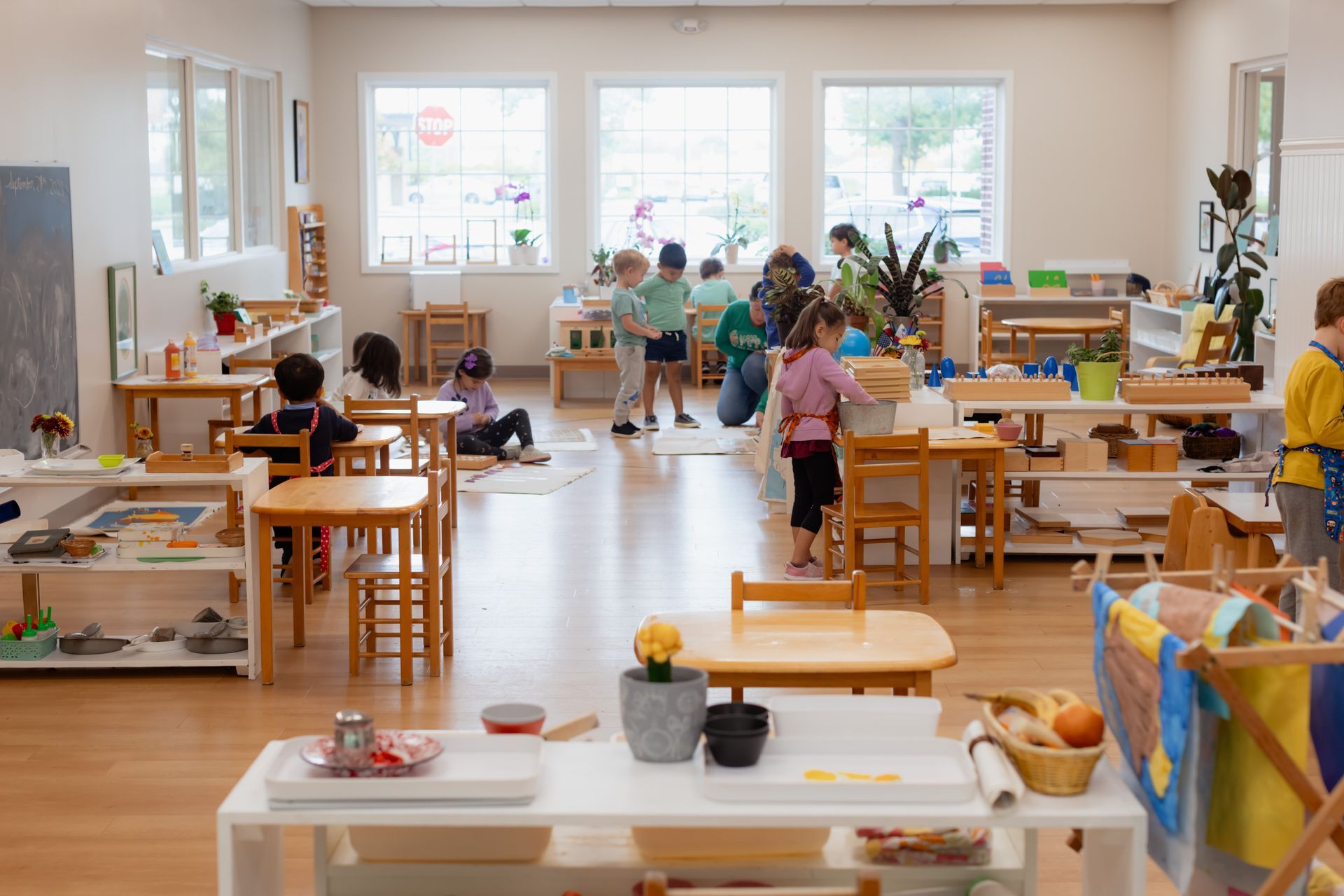
When you step into a Children’s House classroom at Stepping Stones Montessori, you will immediately notice that children are not sitting in isolated rows facing a chalkboard. Instead, they are working alongside, observing, and collaborating with one another.
Peer learning is one of the most effective educational drivers known, and our mixed-age classrooms are deliberately structured to foster it:
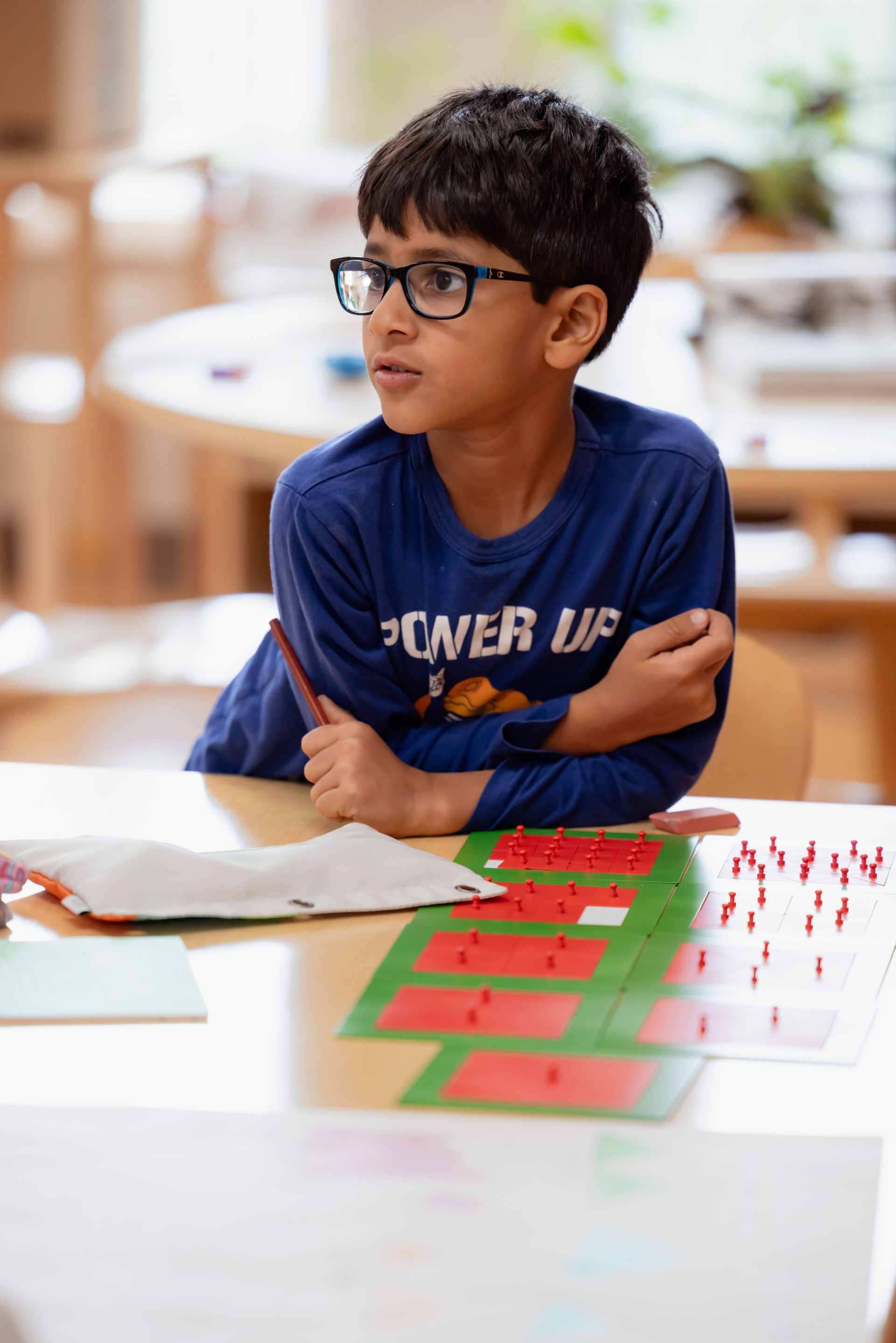
- Learning Through Observation: A three-year-old watching a five-year-old complete a complex math or language layout is not just looking—they are absorbing possibility. This often triggers a spontaneous "explosion" of interest in writing or counting across the classroom.
- Deepening Mastery: Older children consolidate their own understanding by guiding younger classmates. Teaching a skill to a peer requires a high level of comprehension, leadership, and empathy.
- Long-Term Community: Because children stay in the same Children’s House classroom with the same Guide for three years, they build deep, trusting relationships that provide a secure foundation for learning.
Principle 6: Meaningful Context Makes Learning Richer and More Lasting
Children retain information far better when what they are learning connects directly to something real and purposeful, rather than abstract drills on paper.
What the Research Shows: In a striking study cited by Dr. Lillard, three-year-olds were asked to memorize lists of items. When the items were presented as a shopping list for a pretend store, the children remembered twice as many items as those who were simply asked to memorize a list. Purpose and context doubled their memory capacity.
At Stepping Stones Montessori, context is built into every activity:
- Practical Life Exercises: Activities like food preparation, plant care, and handwashing teach fine-motor precision while showing children that their work has real value in their classroom community.
- Integrated Curriculum: Vocabulary develops alongside tactile exploration, and math concepts are experienced physically before they are ever written on paper.
Principle 7: How Adults Interact with Children Shapes Everything
The way a parent or teacher responds to a child's efforts has effects that ripple far beyond the immediate moment.
What the Research Shows: Pioneering research by psychologist Carol Dweck demonstrates how a single sentence of feedback can alter a child's mindset:
- Children praised for their intelligence ("You are so smart") later chose easier tasks, enjoyed them less, and gave up quickly when faced with difficulty.
- Children praised for their effort ("You worked really hard on that") sought out harder challenges, recovered quickly from mistakes, and improved their performance over time.
In our classrooms, our Guides practice intentional restraint. Instead of constantly stepping in to correct errors or offering generic praise, Guides observe carefully and intervene only when a task becomes genuinely unproductive or unsafe. Our materials are self-correcting, allowing the child to discover and fix mistakes independently. This approach helps children build internal resilience and look inward for satisfaction rather than outward for approval.
Principle 8: Order in the Environment Supports Order in the Mind
The calm, ordered aesthetic of a Montessori classroom is not just for appearance—it is a carefully calculated support for cognitive development.
What the Research Shows: Research consistently demonstrates that clutter, noise, and constant unpredictability carry a heavy cognitive cost. When an environment is chaotic, a child expends valuable mental energy managing uncertainty rather than focusing on learning.
Dr. Lillard also highlights research showing that high noise levels negatively impact auditory discrimination, which is essential for phonics, reading, and vocabulary development.
Order in a Montessori classroom exists in two key ways:
- Spatial Order: Every material has a specific shelf and place. Children take ownership of their classroom by returning materials when finished, caring for plants, and keeping their environment clean.
- Temporal Order: Our 3-hour uninterrupted morning work cycle gives children the time needed to transition from initial engagement to deep concentration and "flow." Frequent bell rings, class pivots, and rigid time slots disrupt focus; uninterrupted time allows deep intellectual work to happen.
The quiet atmosphere characteristic of a well-functioning Children's House classroom is not enforced by rigid rules—it is the natural byproduct of children who are deeply, happily absorbed in meaningful work.
Experience the Montessori Science in Action
Dr. Lillard’s research offers a clear explanation for why Montessori practices work so well: why our Guides refrain from issuing gold stars, why our classrooms are calm and orderly, and why children choose to repeat the same work until they achieve mastery.
Understanding the theory is powerful, but seeing it in person is where it truly clicks for prospective parents.
Are you exploring primary or early childhood education for your child? We invite you to schedule a private tour of Stepping Stones Montessori School to observe our Children’s House classrooms and see these principles in action.